
What Does Creatine Do?
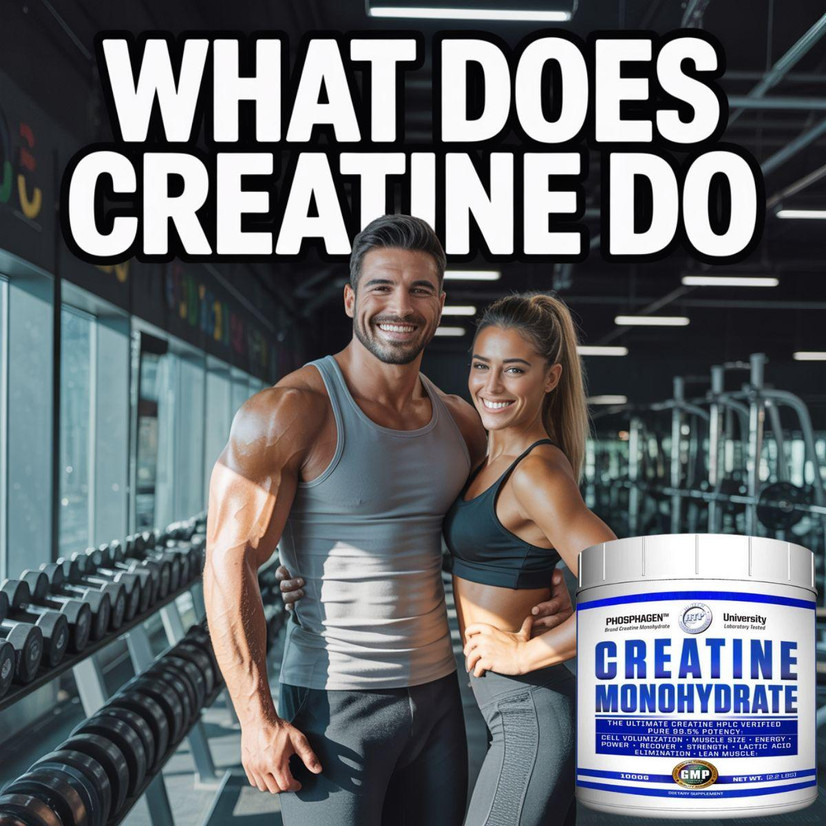
Deep Dive Into Creatine & The Science Behind The Benefits
When it comes to supplements in the fitness world Creatine takes the crown for being the most popular, most widely taken and most studied supplements of all time. But what is creatine exactly and how does it work in your body? Beyond just muscle building, more recently a lot of the attention creatine has been getting, particuarly from Fitness Influencers like Joe Rogan and Andrew Huberman, among others, are the impressive cognitive benefits creatine provides. So let's break it down...
What is Creatine?
Creatine is a naturally occuring compound found in small amounts in foods like red meat and fish. Creatine is also produced by your liver, kidneys and pancreas. In your body creatine is stored primarily in your muscles as phosphocreatine which plays a key role in producing energy during high intensity exercise. While your body makes some creatine on its own, supplementing with creatine can help increase the amount stored in your muscles and provides a greater energy reserve for intense activity.
How Creatine Works in the Body
At the cellular level creatine is important for the production of adenosine triphosphate or ATP which is the primary energy currency of the cell. During short bursts of high intensity activity like weightlifting, sprinting or jumping, your muscles rely on ATP for energy. Your ATP stores however are limited and can be depleted within seconds of exerting maximum effort. This is where creatine comes in by increasing phosphocreatine stores in the muscles, creatine allows for faster regeneration of ATP meaning your muscles can sustain high intensity efforts for longer and recover more quickly between sets.
This boost in ATP translates directly to performance benefits including more reps in the gym, higher intensity sprints, and generally better athletic output. Over time these performance gains can contribute to increased muscle mass and strength as your muscles are able to work harder and recover faster, promoting growth.
Muscle & Physical Benefits
Creatine supplementation is best known for its effects on muscle growth. It allows muscles to perform more work before fatigue and it indirectly supports hypertrophy or muscle size increase. But that's not all, creatine also promotes cellular hydration and draws water into the muscle cells which can improve muscle volume and even aid in protein synthesis. Creatine has also been shown to reduce exercise induced fatigue, enhance recovery and support performance in activities that require short explosive bursts of energy.
The Lesser Known Cognitive Benefits of Creatine
What's less commonly known but equally impressive are the cognitive benefits of creatine, creatine isn't just for muscles. The brain also relies on ATP to function efficiently and just like your muscles it can benefit from extra phosphocreatine reserves. Research suggests that creatine supplementation can improve cognitive performance, particularly in tasks thtat requier short term memory, reasoning and quick decision making, particularly under conditions of mental fatigue or stress. One of the most impressive things about creatine is a study Joe Rogan often cites which showed that if one is sleep deprived and for example performing at say half of their normal level of cognition, a hefty dose of 15-20 grams of creatine can potentially bring you up to your baseline level of cogintion even when heavily sleep deprived. For vegetarians and others who may have lower baseline creatine levels, supplementation can have even more pronounced cognitive effects.
Different Forms of Creatine
While Creatine Monohydrate is the most researched and widely used form, as well as the most cost effective generally, there are several other forms of creatine on the market, each with its own potential benefits.
- Creatine Monohydrate - This is the gold standard and the most studied and cost effective creatine for improving muscle strength, power and size. Most people start here because its effective, the most cost effective and works for almost everyone.
- Creatine HCL - Known for its better solubility in water HCl may be easier on the stomach and requiers smaller doses compared to monohydrate. Some people choose this if they experience bloating or digestive issues with monohydrate.
- Creatine Nitrate - Bound with a nitrate molecule, this form may help with better absorption and also supports increased blood flow to muscles, potentially giving a slightly improved pump during workouts.
- Buffered Creatine / Kre-Alkalyn - This version is formulated to be more stable in the stomach's acidic environment, which some users believe reduces the breakdown of creatine before it reaches the muscles. It's marketed as requiring smaller doses and for causing less water retention but it's generally considerably pricier than creatine monohydrate.
Ultimately while creatine monohydrate is the most proven and affordable, these alternative forms can be useful for those with digestion concerns, sensitivity to water retention or for those who are seeking specific performance effects like enhanced pumps.
Creatine Safety & Usage
Creatine is one of the most researched supplements in existence and is considered safe for healthy adults when used at recommended dosages. A typical protocol involves a loading phase of 20 grams per day for 5-7 days, although these days many users are opting to skip the loading phase, and then taking a maintenance dosage of 3-5 grams daily. Many people skip the loading phase and still see benefits over a longer period of time. Creatine is water soluble so it's important to stay hydrated while supplementing with creatine.
Wrapping Up
In short creatine is a powerful supplement with proven benefits for both physical performance in athletics or in the gym as well as supporting brain function and cognition. By increasing phospocreatine stores it helps your muscles regenerate energy faster, push harder and recover quicker, all to help you to ultimately grow stronger. At the same time it also supports brain health and cognitive performance, making it a versatile supplement for anyone looking to optimize both body and mind. Wehther you're an athlete, a weekend warrior or someone looking to support cognitive function, creatine offers a safe, science backed boost to your daily performance.
†The content of this blog post is intended solely for reference and entertainment purposes. We do not offer medical advice or specific guidance regarding the products discussed. Our insights are based on a combination of anecdotal experiences, online studies/reviews, manufacturer details, and customer feedback. While we strive to present accurate and current information, we cannot assure its completeness or its alignment with the most recent product formulations or data. For any concerns or up-to-date information, we recommend visiting the manufacturer's website directly. The opinions and information provided here do not necessarily reflect the views of Best Price Nutrition; they represent the perspectives and information from the manufacturers and users. Furthermore, these statements have not been evaluated by the Food and Drug Administration. The products mentioned are not intended to diagnose, treat, cure, or prevent any disease or illness.
Recent Posts
-

Uronabol: Is This "Apple Peel" Compound The Real Deal or Just Hype?
Is This The Muscle Builder You've Been Waiting For? Vintage Muscle's Uronabol supplement has been ga
-
Ursolic Acid Supplements: Everything You Need to Know
Ursolic Acid Supplements If you're looking to for a supplement to speed run your fitnes goals Ursoli
-

Understanding Ephedra Extract
Ephedra Extract Vs. Ephedra The Whole Herb Those of you who've been into fitness and supplements for